
Last updated November 25, 2026
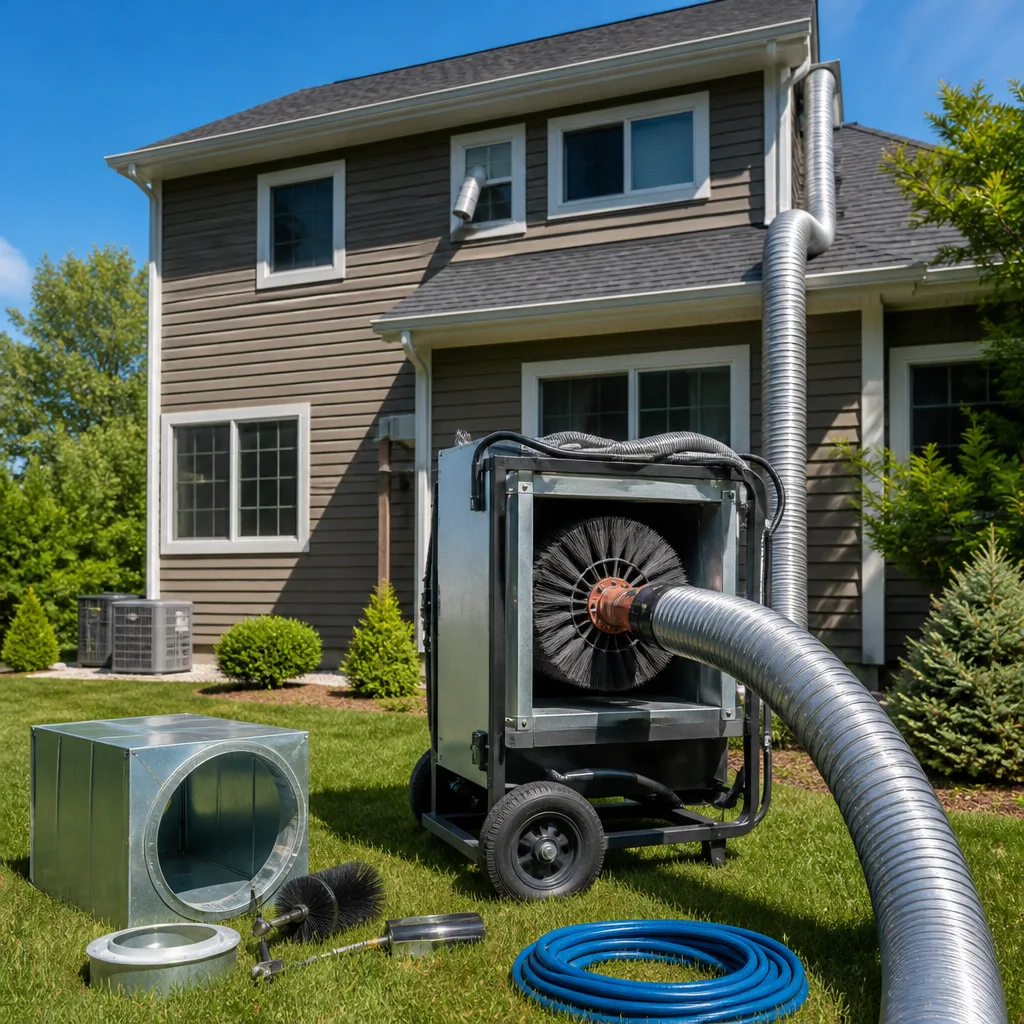 Whole-home duct cleaning
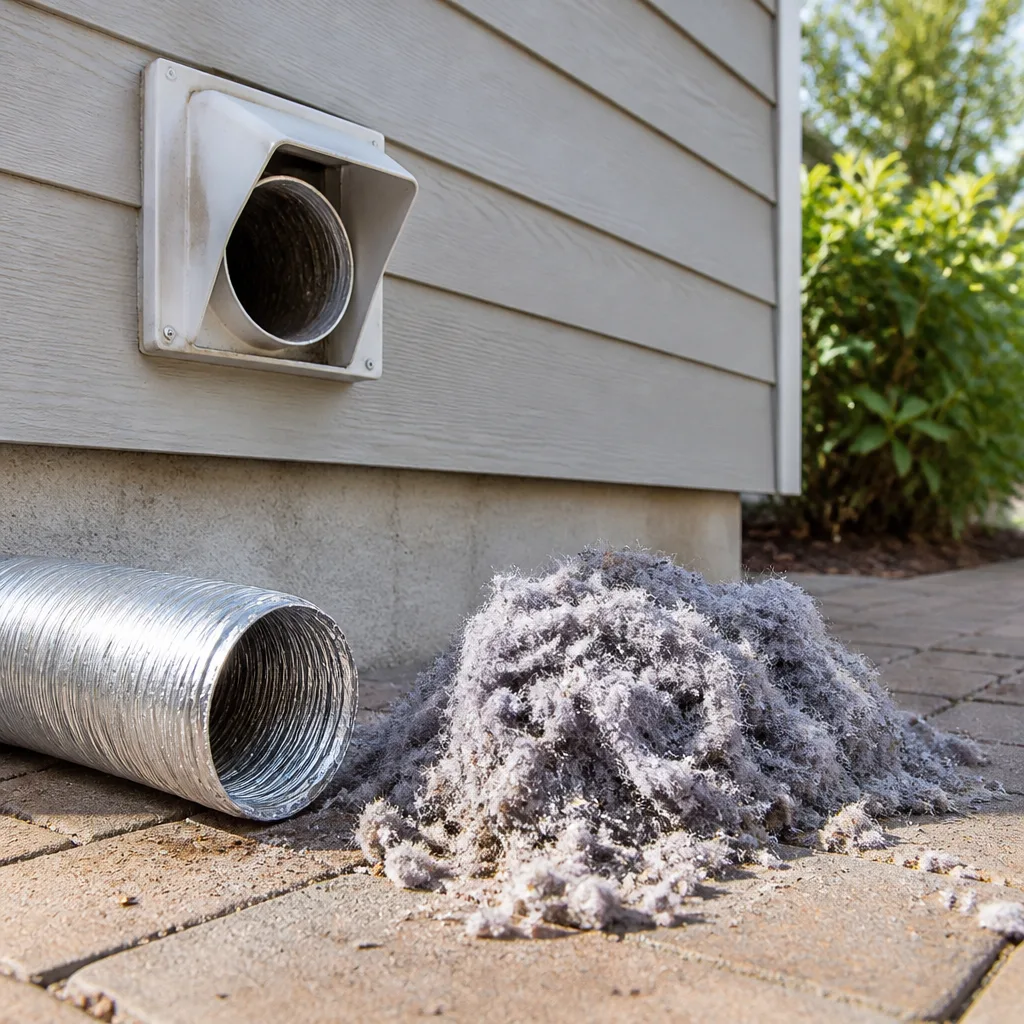 Dryer vent cleaning
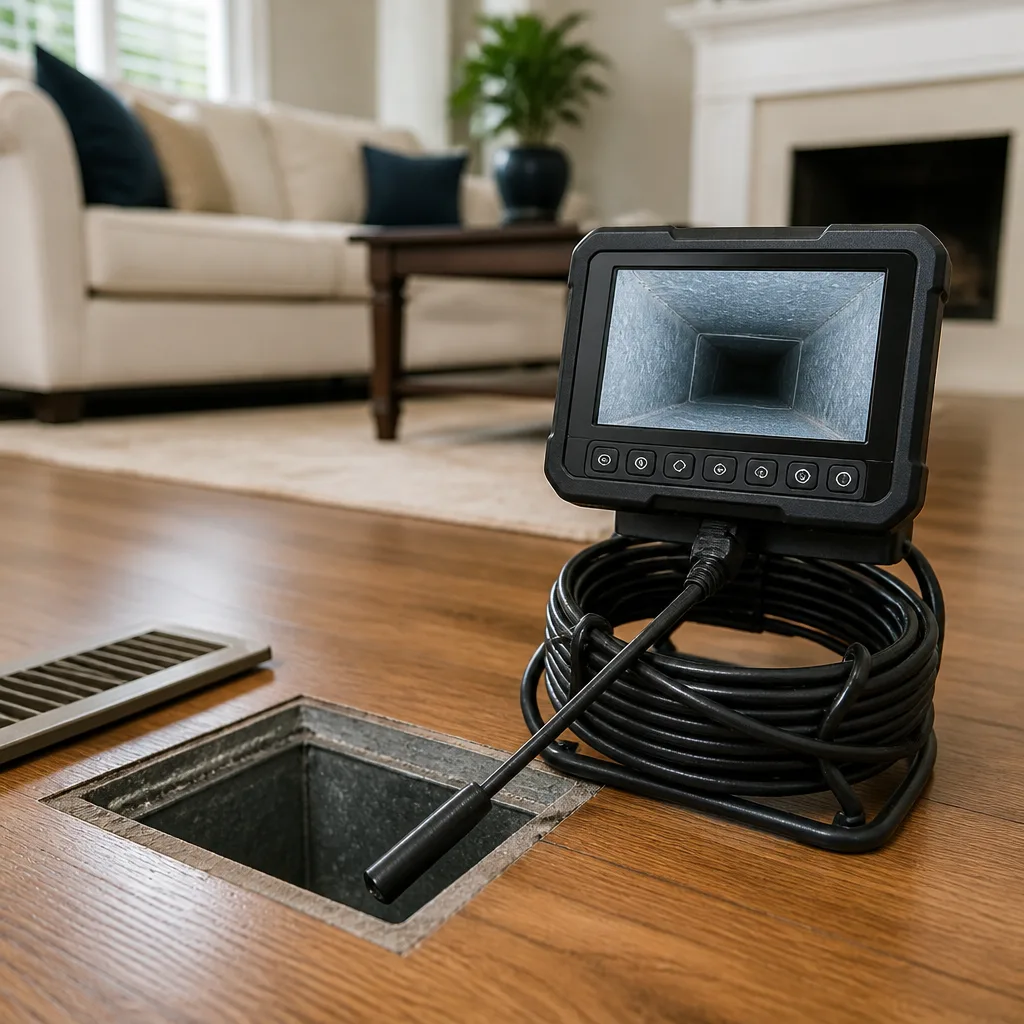 Camera inspection
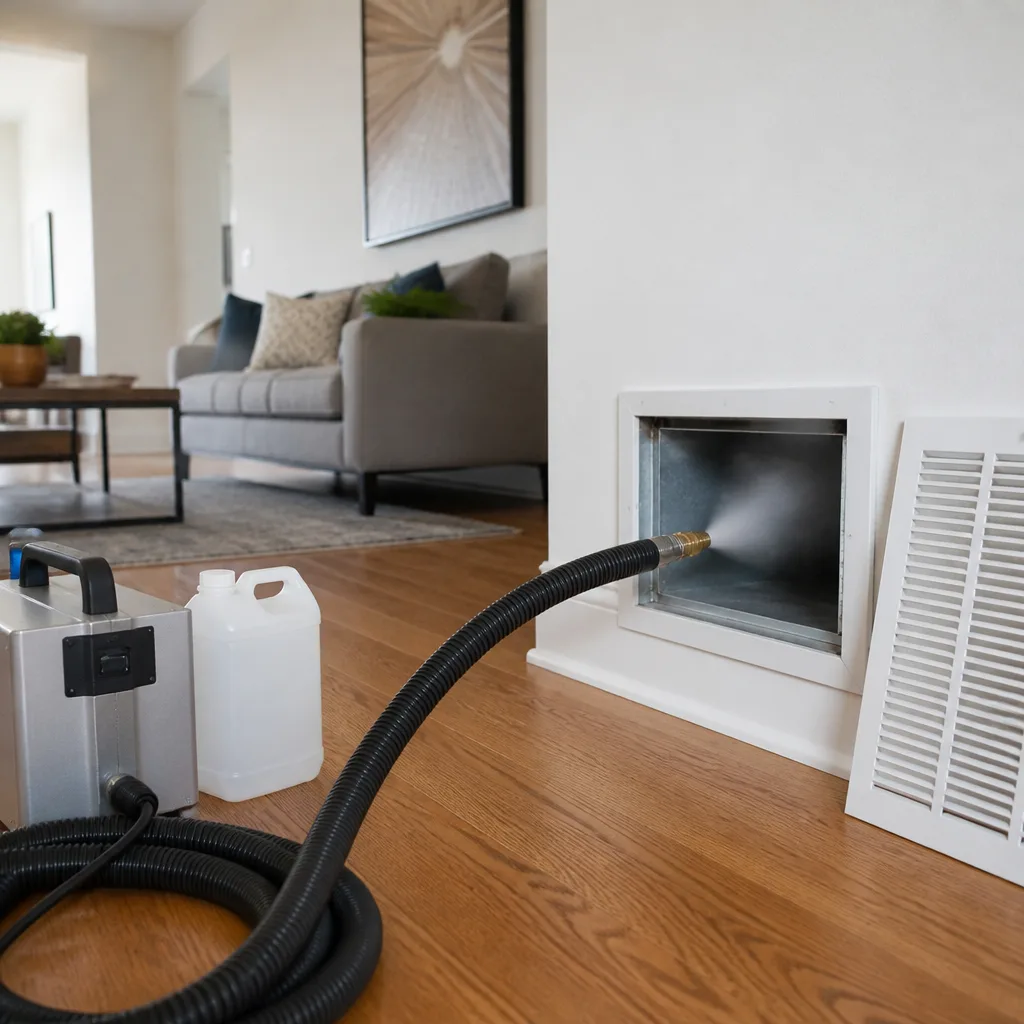 Sanitizing & deodorizing
Whole-system duct and dryer vent check with before-and-after photos - you see exactly what came out of your vents
That "$99 whole-house special" is a bait ad - the real number appears once they are in your hallway, or the "clean" is a shop-vac at the register. We photograph the inside of your ducts before and after instead.
DIY vs Professional Air Duct Cleaning: The Washington Square Homeowner’s Decision Guide
Most homeowners who ask whether they can clean their own ducts are picturing a shop-vac and a long hose. Here’s the part that gets skipped: a consumer-grade shop-vac pulls roughly 80 CFM of suction, while a professional truck-mounted vacuum unit moves 4,000+ CFM. That gap isn’t about brand or budget. It’s a physics problem no attachment kit solves. What you’ll learn in this guide is what a motivated Washington Square homeowner can genuinely accomplish with consumer tools, where those results plateau, when DIY actually makes a contaminated system worse, and the three questions that tell you whether you need DIY maintenance, a one-time professional cleaning, or an ongoing service relationship.
Quick Answer
DIY air duct cleaning can handle surface-level register cleaning, dryer vent clearing, and visual inspection, but it cannot reach the duct interior at the air volume and agitation needed to remove settled debris. A one-time professional cleaning makes sense for older systems, post-renovation homes, musty odors, or allergy triggers. If a Washington Square homeowner’s ducts are heavily contaminated or show signs of mold, professional equipment is the safer call.
Styles & brands we work with
- Whole-home duct cleaning
- Dryer vent cleaning
- Camera inspection
- Sanitizing & deodorizing
Table of Contents
- What DIY Air Duct Cleaning Actually Accomplishes
- Where DIY Cleaning Makes Things Worse
- Equipment Reality Check: Consumer Tools vs Professional Systems
- The Hidden Cost of DIY Duct Cleaning
- A Decision Framework for Washington Square Homes
- When to Call a Professional
- Safety Notes: What Not to Attempt
- Frequently Asked Questions
What DIY Air Duct Cleaning Actually Accomplishes
The honest answer is: more than nothing, but far less than homeowners expect. Consumer tools do have legitimate jobs in a residential air system, and knowing what those are helps you avoid wasting a weekend.
Here’s what a careful homeowner with the right consumer tools can genuinely do:
- Register cleaning. The supply and return grilles at floor and ceiling level collect visible dust, pet hair, and debris. Removing them and washing the register faceplates and the visible boot (the short transition piece from register to duct) is achievable and useful.
- Surface vacuuming at the return. A shop-vac with a HEPA filter at the return drop can pull loose surface dust out of the air handler’s immediate intake before it settles deeper.
- Dryer vent clearing. A flexible dryer vent brush kit from a hardware store can clear lint from a short, straight, accessible dryer vent run. This is one of the few tasks where DIY genuinely delivers.
- Visual inspection. A flashlight and a smartphone camera pushed into a register opening give you a rough picture of what’s inside. You’ll usually see more than you wanted to.
- Filter upkeep. Nothing inside a duct system matters if the filter is clogged. Replacing a filter on schedule is a DIY task that does more for indoor air quality than most cleaning attempts.
Where consumer tools plateau is the interior of the trunk lines and branch runs. Those are the large-volume sections where the majority of settled particulate accumulates, and they are the sections where suction volume and mechanical agitation – not effort – determine what comes out. In Washington Square, where homes tend to sit within older housing stock that has seen multiple renovation cycles, those interior runs are often the dirtiest part of the system and the least reachable with anything you can buy at a store.
If you’d rather skip ahead, our air duct cleaning overview explains what a professional scope looks like from the first pass to the final seal.
Where DIY Cleaning Makes Things Worse
This is the part of the DIY conversation that rarely gets an honest treatment. Amateur cleaning isn’t dangerous in most homes, but there are specific scenarios where a shop-vac and a duct brush actively do damage – and those scenarios are predictable.
The clearest example is disturbing mold growth. If you see dark spotting, musty odors, or visible moisture staining inside a register boot, the mold is likely already established on the duct liner or interior surfaces. Vacuuming it with a consumer tool stirs spores into the airstream and pushes them deeper into the system without removing them. What you want in that scenario is a contained negative-pressure collection setup with sanitizing after extraction – which is exactly what Abatement Technologies equipment and post-cleaning Guardsman-grade sanitizing products are designed for. A shop-vac cannot contain what it kicks up.
The second scenario is deteriorated duct liner. In older Washington Square homes, interior duct insulation has often begun to fray, delaminate, or disintegrate after years of thermal cycling. A consumer rotary brush or a rigid duct brush is not gentle with that material. It fragments the liner and sends loose fiberglass downstream into the system – sometimes into the air handler itself. Professional cleaning equipment uses controlled agitation and a collection path that captures what comes loose rather than redistributing it.
The third scenario is a hidden gap or disconnected joint. Consumer cleaning has no way to identify duct leakage during the process. If your system has a disconnected section of flex duct or a large gap in a trunk transition, DIY cleaning won’t reveal it, but it will push debris into the gap and into the surrounding cavity. Duct repair and sealing after cleaning is how you’d catch it – and that’s a professional step. As we put it: we clean the system, then we seal it, so it stays clean.
None of this is meant to scare anyone away from basic maintenance. The point is that DIY has a ceiling, and that ceiling is much lower than most homeowners expect once contamination levels rise.
Equipment Reality Check: Consumer Tools vs Professional Systems
Let’s compare what’s actually in each toolbox. The gap is not about a brand name on a sticker; it’s about the physical principles of extraction and containment.
Consumer tools you can buy or rent:
- Shop-vac, 5 to 12 gallons, with roughly 80 to 180 CFM of suction.
- Flexible dryer vent cleaning kits – usually 12 to 30 feet of brush on a flexible rod, designed for lint in short runs.
- Big-box store duct brushes – rigid or semi-flexible rods with nylon or wire brush heads for reaching past a register.
- HEPA filters for a shop-vac (helpful, but only capturing what the vac actually pulls).
Professional equipment:
- Rotobrush rotary-brush system – purpose-built mechanical agitation that advances through the duct, loosening adhered debris rather than relying on suction alone.
- Nikro negative-pressure equipment – keeps the system under containment so loosened debris is captured at the collection point and doesn’t cycle back into the room.
- Abatement Technologies remediation tools – rated for contaminant-level scenarios (mold, allergens, post-renovation particulate) where a consumer vacuums debris back into your living space.
- Guardsman-grade sanitizing products – applied post-cleaning to treat interior surfaces, so the system isn’t merely vacated but treated.
The core difference to understand is agitation plus containment. A shop-vac moves air. A professional system moves air through a designed extraction path, mechanically agitates debris off the duct wall, and collects it in a contained stream. Without agitation, adhered particulate doesn’t move regardless of suction volume. Without containment, what does dislodge gets pushed back into the living space. Purpose-built equipment, not repurposed shop vacs, is what makes the process verifiable.
Our HVAC cleaning service covers the full air-handling side of that equipment picture, including the coil and blower sections that register-level work never touches.
The Hidden Cost of DIY Duct Cleaning
DIY duct cleaning starts cheap on paper. The honest full-number accounting tells a different story, especially when you factor in time and the odds of a follow-up call to a professional.
Line-item DIY costs:
- Duct brush kit or dryer vent kit: roughly $40 to $100, depending on reach and brush quality.
- Shop-vac with HEPA filter (if you don’t have one): $100 to $250.
- Replacement air filters after the attempt (filters load fast once debris is disturbed): $15 to $40 per filter, often more than one needed within weeks.
- Time: a full weekend for a motivated homeowner attempting trunk-line access with consumer tools – and in most cases the deepest sections still don’t get reached.
- Equipment rental, if you go that route: $50 to $150 for a day, plus the return trip.
Add up the middle of those ranges and you’re sitting at $250 to $500 before accounting for the weekend. And the follow-up professional call is the hidden line item most DIY guides leave out: when a homeowner reaches their ceiling and realizes the interior of the trunk is still dirty, the professional call happens anyway – after the equipment and time have already been spent.
By contrast, a whole-system professional cleaning for a typical Washington Square house runs in a range where the difference between DIY and professional is a matter of hundreds, not thousands. When we walk through a home, we quote the whole system at one flat price agreed before work starts – no per-vent pricing, no surprise line items after the technician starts. Before-and-after photos of your own ducts are part of the deliverable, which is the only honest way to know whether anything was actually done.
The arithmetic matters. It just gets skipped in the DIY conversation.
A Decision Framework for Washington Square Homes
Most homeowners don’t need a lecture; they need a sorting rule. Here are three questions that will tell you which route fits your house.
Question 1: What’s the age and renovation history of the system?
If the ducts have been cleaned in the last three to five years and the house hasn’t gone through a major renovation since, DIY register cleaning and filter replacement are usually enough. If the home was built decades ago and the ducts have never been cleaned – or if there’s been a recent renovation that kicked up drywall dust, sawdust, or insulation fibers – a professional cleaning is the honest call. Washington Square has a lot of homes in that second category.
Question 2: What are you actually experiencing?
Here’s the split that matters most:
- Nothing specific. No odors, no allergy complaints, no visible dust rush from registers. DIY maintenance is fine. Keep up with filters and clean the registers when they look dusty.
- Mild, recent symptoms. Slight mustiness after a renovation or a new filter is loading faster than usual. A one-time professional cleaning is a reasonable answer; it resets the system and lets you see whether the problem returns.
- Persistent odors, allergy triggers, visible debris, or a recent home inspection that flagged the ducts. This is where DIY stops being useful. The system needs a professional, contained cleaning with proper equipment, and likely sanitizing after.
Question 3: How does your dryer vent look?
Dryer vent cleaning isn’t an add-on. It’s a fire-prevention appointment. If the vent run is long, has multiple elbows, or runs through a wall or attic, DIY dryer vent kits don’t reach far enough. If it’s short and straight and accessible, a homeowner can maintain it between professional cleanings. When in doubt, treat the dryer vent separately from the ducts. See our dryer vent cleaning page for the standalone scope.
Answer those three questions and the route is usually obvious: DIY maintenance for clean systems, a one-time professional cleaning for the middle band, and an ongoing relationship (periodic cleaning plus duct repair and sealing) for older homes with recurring air quality issues.
When to Call a Professional
The line between DIY-maintainable and professional-necessary is easy to cross without realizing it. Call us when: your ducts have never been cleaned and the home is more than 15 to 20 years old; you’ve recently finished a renovation that produced dust; you’re seeing visible debris blowing from a register; you notice musty odors that get worse when the system runs; someone in the house has recurring allergy or respiratory symptoms that seem tied to HVAC cycles; a home inspection flagged the ducts; or your dryer vent is long, inaccessible, or venting slowly. Any of those is a professional scope.
We also recommend calling after you’ve attempted DIY cleaning yourself and want a second assessment. Air Duct Cleaning Washington Square offers free estimates in Washington Square – call (877) 792-6053. We answer 24/7. Fast dispatch, 7am-7pm, Sunday through Friday.
Safety Notes: What Not to Attempt
Duct cleaning itself isn’t dangerous for most of the system, but there are points where a homeowner should stop and call someone.
Electrical components. The air handler, blower motor, capacitor, and any wiring inside the mechanical closet are not DIY territory. Opening a panel to reach duct connections upstream of the blower exposes live electrical components. Leave it to a trained technician.
Mold. If you see visible mold growth inside a register boot or duct opening, don’t vacuum it with a consumer tool. Spores distribute widely when disturbed. Contained remediation with proper equipment and post-cleaning sanitizing is the safe path.
Gas appliances and combustion venting. Flue vents from gas furnaces and water heaters are not part of the duct system and shouldn’t be touched during DIY cleaning. A wrongly dislodged flue connector is a serious carbon monoxide risk.
Height and roof access. Dryer vents or exhaust terminations on a roof or high exterior wall are not DIY access points. Use a professional – a fall injury isn’t worth the saved cost.
Damaged liner. If you can see fraying insulation inside the duct, don’t run a brush through it. You’ll fragment it and send it downstream.
Better air starts with knowing what’s actually in your ducts – and knowing what you shouldn’t disturb to find out.
See the difference
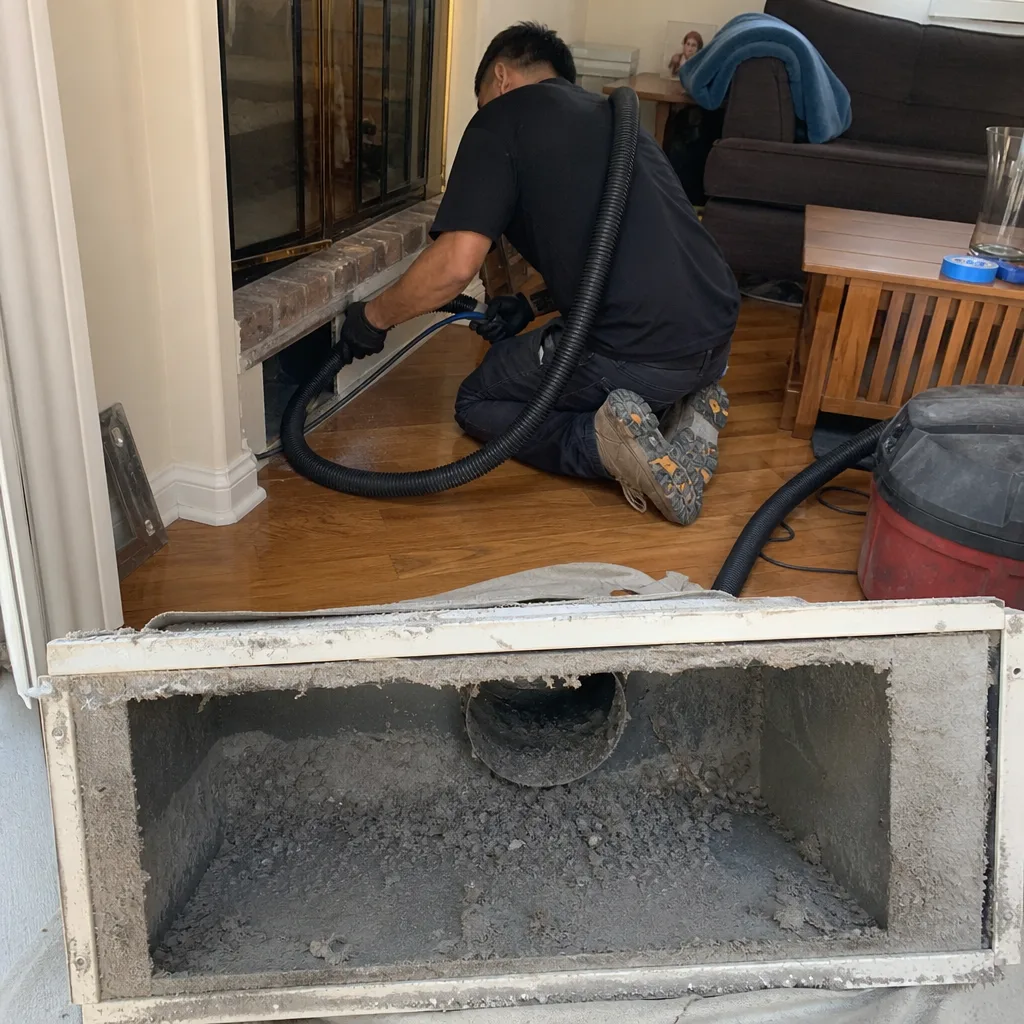 Before
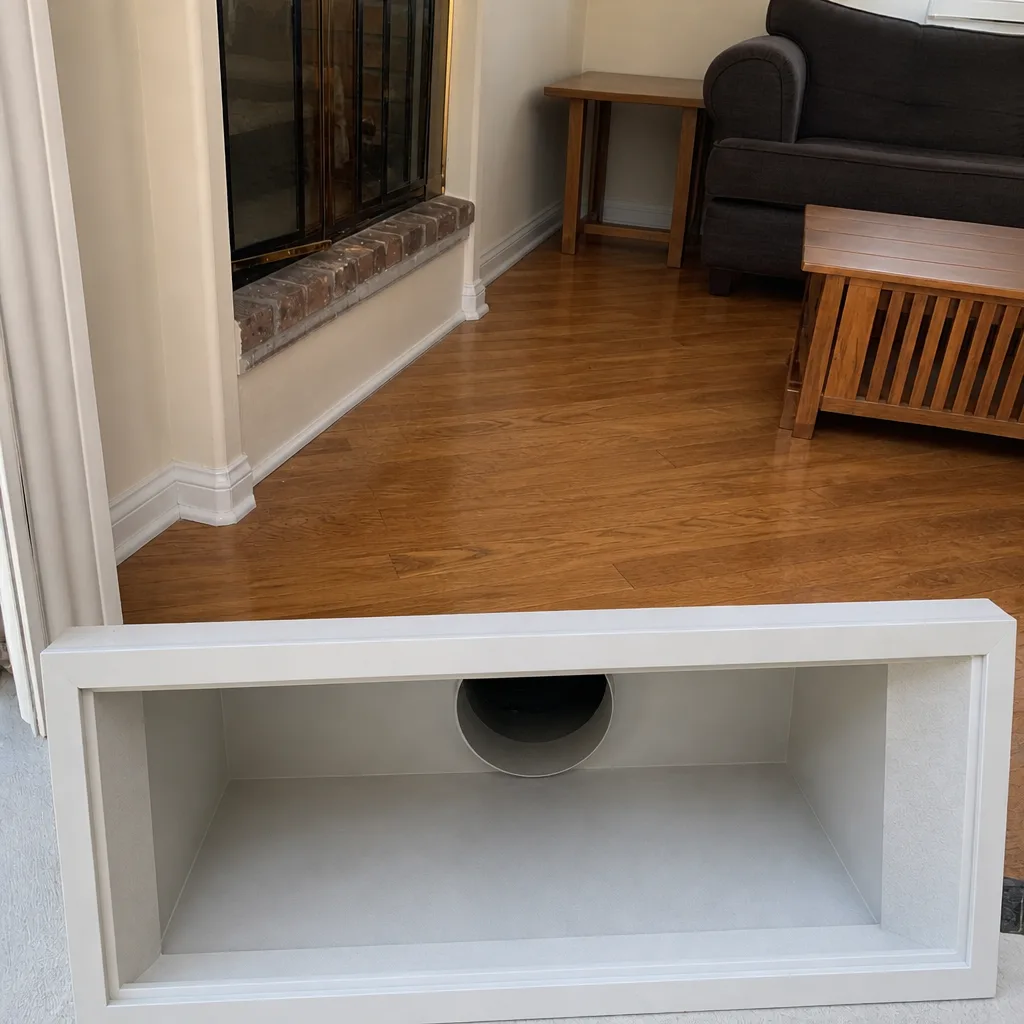 After
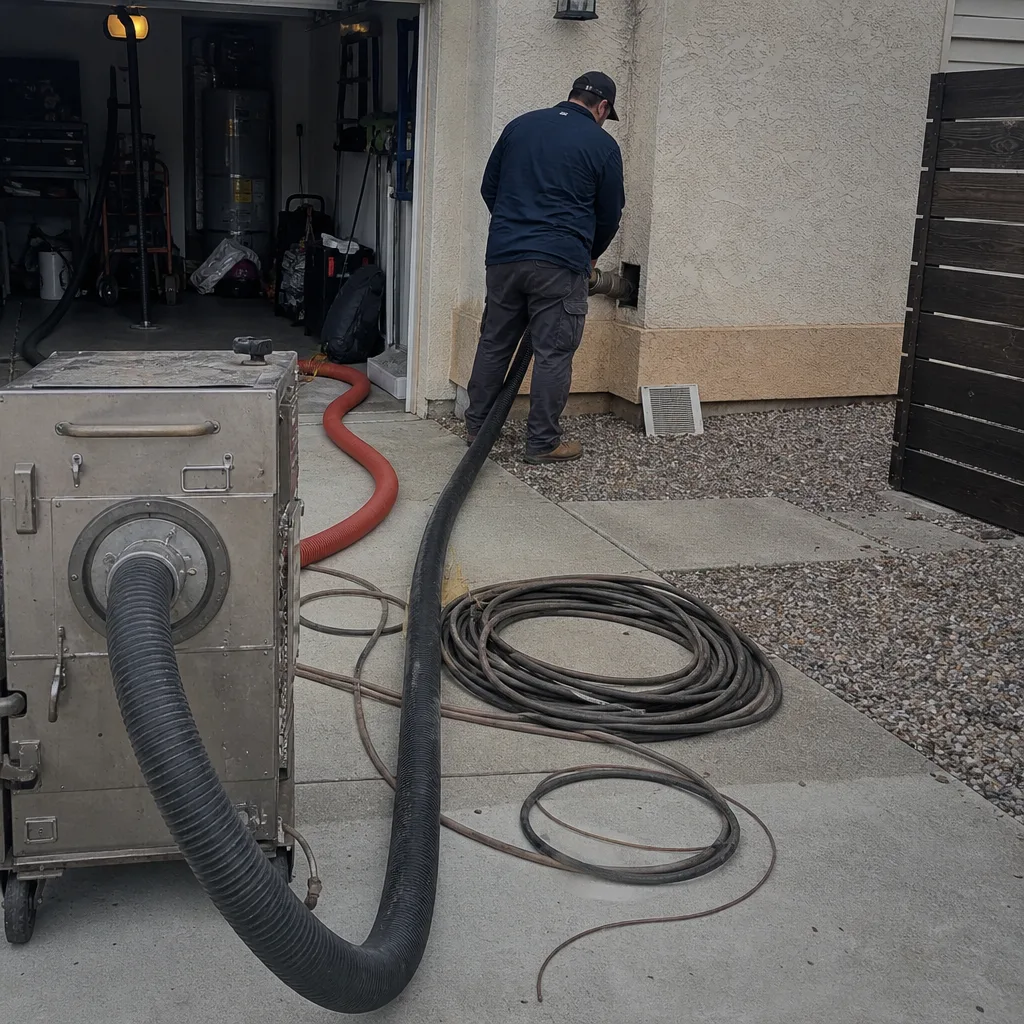 Before
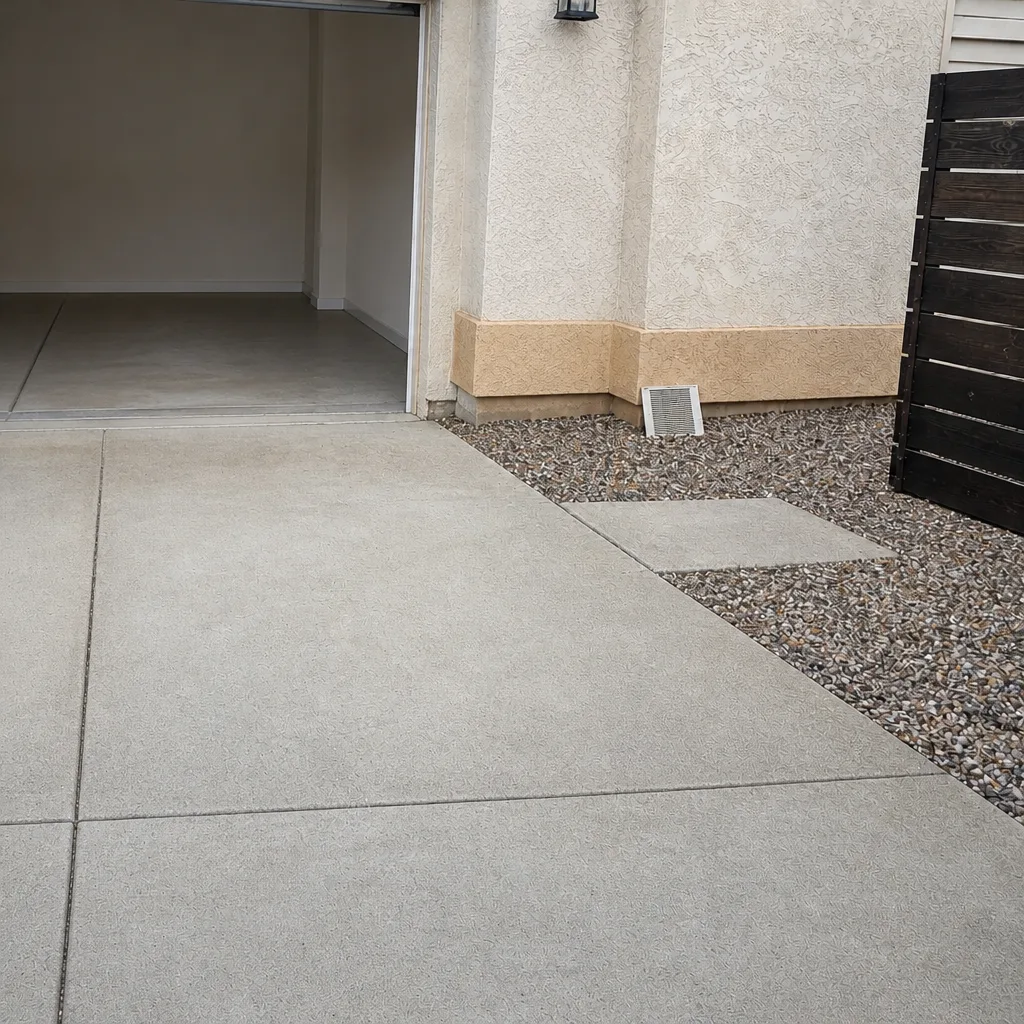 After
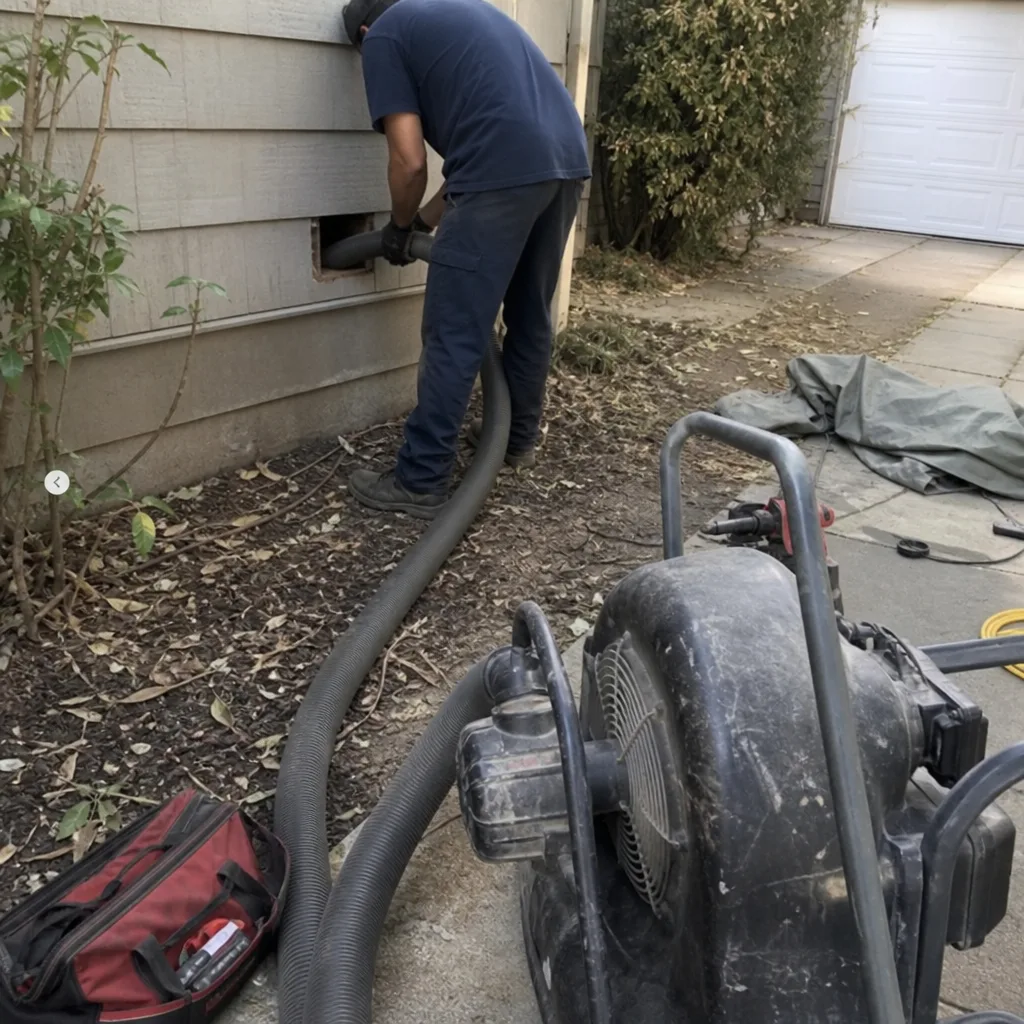 Before
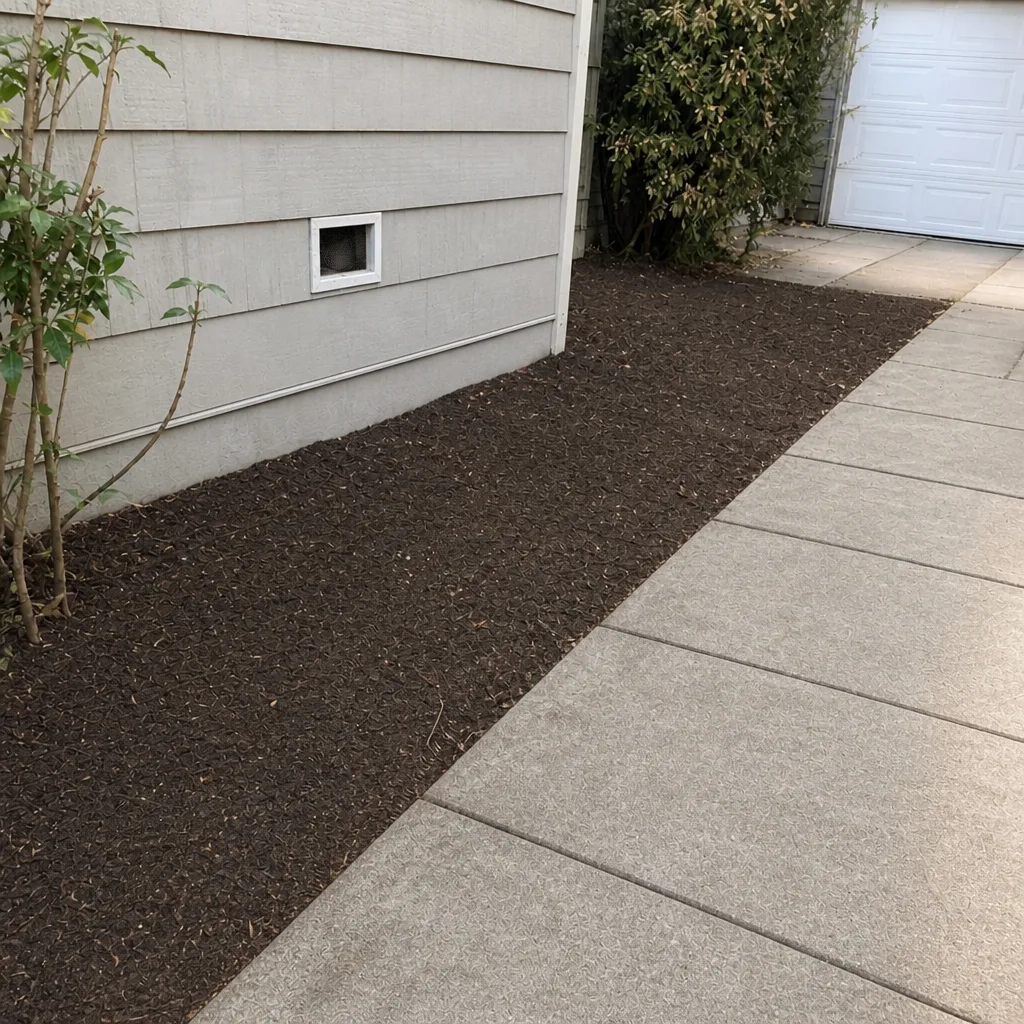 After
Common Mistakes to Avoid
- Starting with the shop-vac before checking the filter. A clogged filter means the debris you pull out of the registers gets pushed back into the air handler. Replace the filter first, before any cleaning starts.
- Using a rigid brush on aging flex duct. Older Washington Square homes often have flex duct that’s already brittle. A rigid brush tears the interior liner and puts fiberglass into the airstream. If the duct feels stiff or looks frayed at a register, don’t brush it.
- Vacuuming visible mold. As covered above, this spreads spores. Contact a professional if you see spotting or smell persistent mustiness.
- Skipping the return side. Most DIY cleaning focuses on supply registers and ignores the return air path, which is often the dustiest part of the system. If you clean one side, clean both or neither.
- Ignoring the dryer vent because it “seems fine.” Slow drying times, a hot dryer exterior, or lint visible past the lint trap are warning signs. DIY vents clear short runs; long or routed runs need a professional visit.
- Assuming a cleaner price equals a cleaner system. In Washington Square, offers that price per vent or advertise a low teaser rate often expand once the technician is on-site. Ask for a flat price per system, in writing, before work begins.
- Not asking for before-and-after photos. The only way to verify cleaning happened is to see photos of your own ducts. Ask before the visit, not after.
Frequently Asked Questions
For a typical single-family home in Washington Square, a whole-system professional cleaning usually runs in the range of several hundred dollars, with pricing set per job by a written estimate based on square footage, number of registers, and system configuration. We don’t quote per-vent or advertise a teaser coupon, because those are the prices that grow once the technician is on site. Call (877) 792-6053 for an exact quote – estimates are free.
Low quotes in this trade usually reflect one of three things: a price per vent that assumes every home has three registers, no containment equipment (so debris is stirred but not captured), or no follow-up visit for ducts that need repair or sealing after cleaning. A price with those holes in it isn’t a discount, it’s a different scope. Ask for a flat price for the whole system, in writing, before anyone starts. Call (877) 792-6053 for a free estimate.
Before-and-after photos of your own ducts are the only reliable proof. We take them on every job, and if a contractor won’t offer them, that’s the answer. Ask to see the equipment on arrival as well. Rotobrush and Nikro gear is visible and purpose-built – it doesn’t look like a shop-vac. Call (877) 792-6053 if you’d like a second opinion on a prior cleaning.
Every three to five years is a reasonable default for most homes, and sooner after a renovation, a move-in, or a new pet addition. Homes with allergy sufferers, older duct liner, or heavy pollen exposure often benefit from a tighter interval. Washington Square homes with older HVAC systems usually sit at the shorter end. Our technicians have up to 8 years of experience and can advise when you call (877) 792-6053.
You can clean the register faces and reach some surface debris at the return, but you can’t move enough air volume or agitate adhered debris off the interior duct wall to matter. A shop-vac pulls around 80 CFM; a professional truck-mounted unit draws several times that. For a system that’s been cleaned recently and isn’t contending with mold or post-renovation dust, DIY register maintenance plus filter upkeep is reasonable. For older, contaminated systems, it isn’t.
Yes. Our scope covers duct cleaning, sanitizing, repair and sealing, plus HVAC cleaning and standalone dryer vent cleaning. If a cleaning reveals a gap, a disconnected joint, or a deteriorated section, we can seal or repair it on the same service visit rather than sending you to another contractor. Call (877) 792-6053 for details – estimates are free.
The Bottom Line
DIY air duct cleaning is a legitimate first step for homes that have been professionally cleaned recently and just need register maintenance, dryer vent clearing, and steady filter replacement. For older Washington Square homes with contaminated duct liner, post-renovation debris, musty odors, or allergy triggers, shop-vac suction hits its ceiling fast – and can do damage by disturbing mold or fragmenting aging liner. The productive middle is a one-time professional cleaning, verified with before-and-after photos, at a flat price per system. From the first pass to the final seal, one crew, one visit – that’s the standard we hold ourselves to. If you’re ready to move past the shop-vac, call (877) 792-6053 for a free estimate. We answer 24/7. Fast dispatch from 7am to 7pm, Sunday through Friday.
If you’re weighing other services in the same visit, our Air Duct Cleaning Washington Square hub explains how a professional cleaning, sanitizing, and dryer vent appointment can be scheduled together – and anywhere in Washington Square you happen to live, the estimate is free and the quote is set per system.
Written by the team at Air Duct Cleaning Washington Square.