
Last updated November 25, 2026
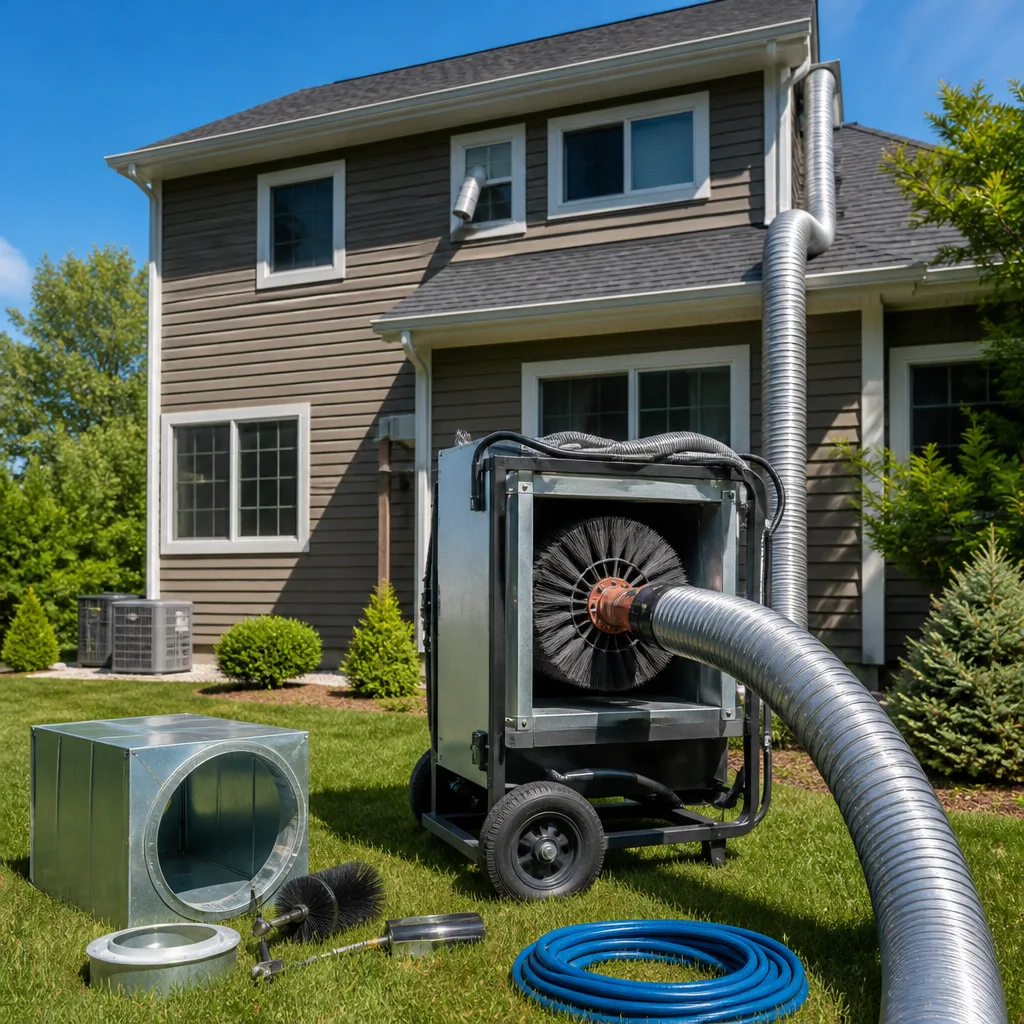 Whole-home duct cleaning
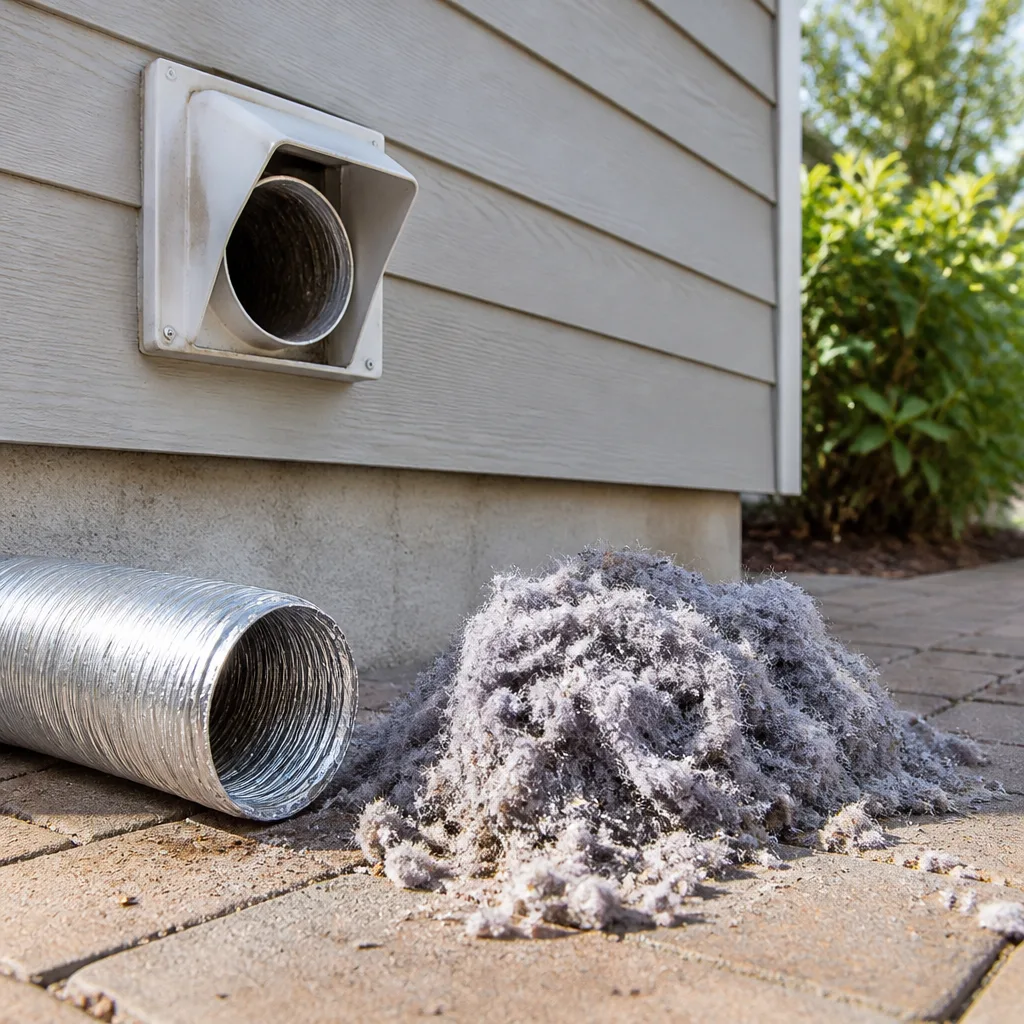 Dryer vent cleaning
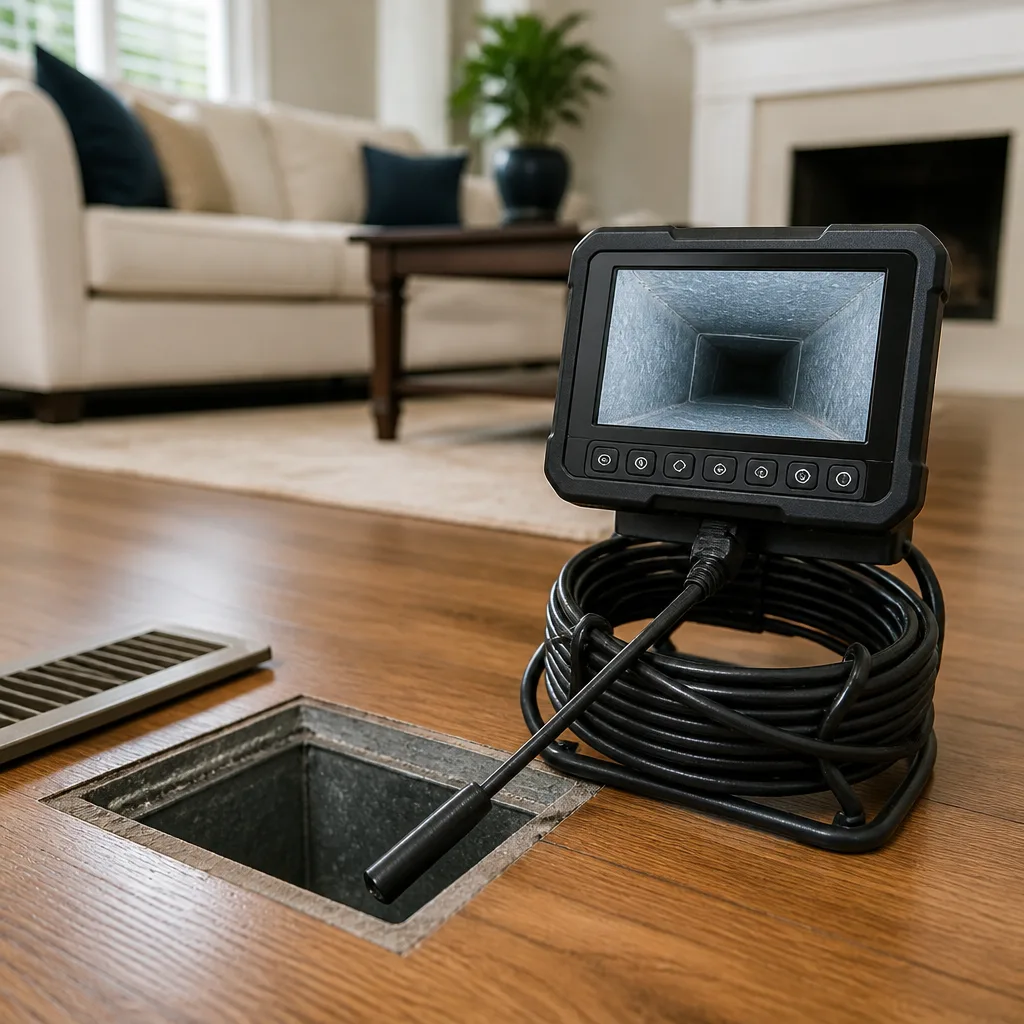 Camera inspection
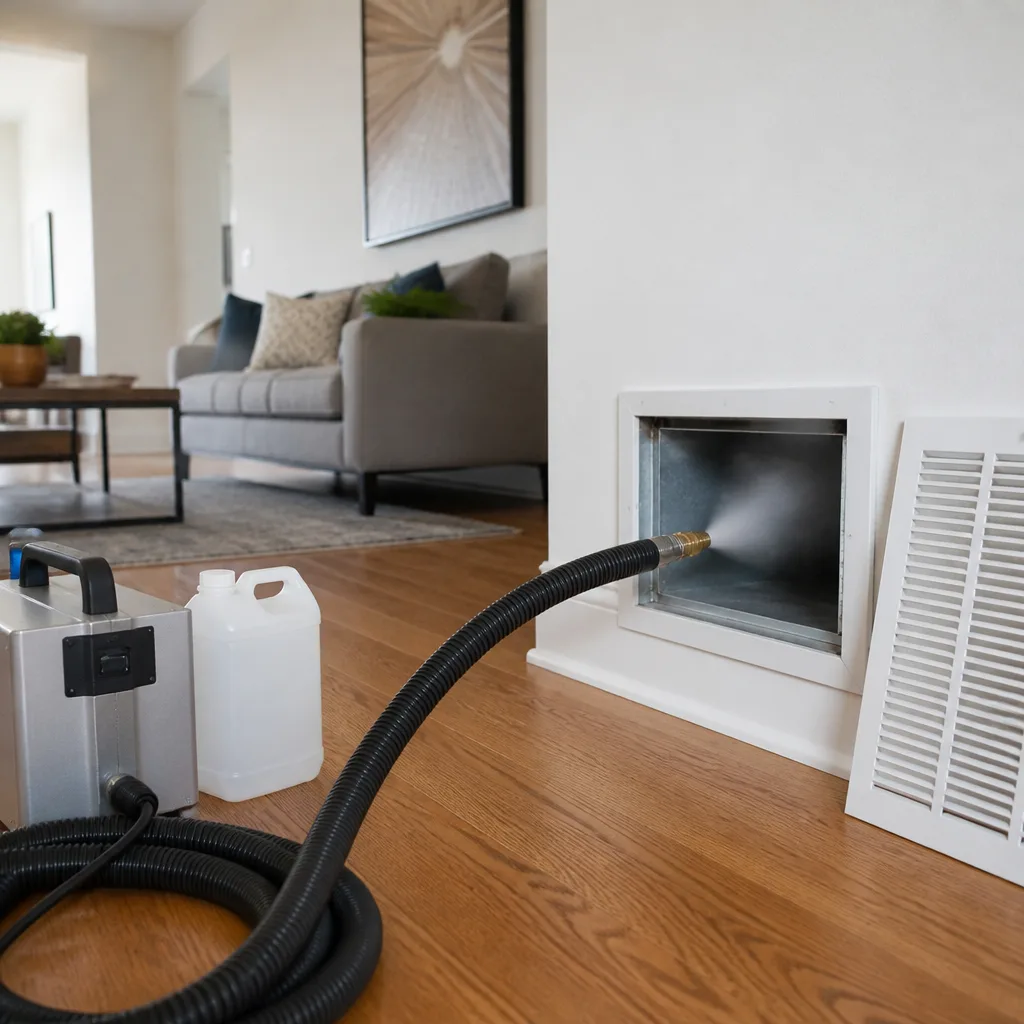 Sanitizing & deodorizing
Whole-system duct and dryer vent check with before-and-after photos - you see exactly what came out of your vents
That "$99 whole-house special" is a bait ad - the real number appears once they are in your hallway, or the "clean" is a shop-vac at the register. We photograph the inside of your ducts before and after instead.
Air Duct Cleaning Emergency Preparedness Guide for Washington Square Homes
Most Washington Square homeowners have a go-bag, a water supply, and a plan for where to meet. Very few have thought about the ductwork. That’s the gap this guide fills. After the 2018 Camp Fire, homes 150 miles from the burn zone tested positive for smoke particulates embedded in duct liner, and the homeowners who kept their HVAC running during the event pushed ash through every room for months afterward. Your duct system is the one part of your house that can take a local disaster and spread it to every room. Here’s how to prepare it, shut it down, inspect it, and recover it.
Quick Answer
Prepare your ducts for an emergency by shutting the HVAC system off before smoke or ash arrives, sealing the outdoor air intake, photographing and documenting the system’s pre-loss condition, and booking a professional inspection and cleaning once the event passes and air quality recovers. After an earthquake or flood, don’t run the system to “dry things out” or test it – have the duct system inspected for disconnected flex duct, dislodged plenums, and contaminated duct board before restarting.
Styles & brands we work with
- Whole-home duct cleaning
- Dryer vent cleaning
- Camera inspection
- Sanitizing & deodorizing
Table of Contents
- Why Your Duct System Is the First Responder in a Disaster
- Wildfire Smoke: The HVAC Shutdown Protocol
- Post-Earthquake Duct Inspection Checklist
- The First 72 Hours After a Flood
- How to Document Your Duct System Before an Emergency
- Washington Square-Specific Emergency Risks
- What a Post-Disaster Duct Cleaning Scope Should Include
- How to Restart Your System Safely After AQI Recovers
Why Your Duct System Is the First Responder in a Disaster
Every room in your home is connected to every other room through the duct system. That’s the whole point of it. It’s also why contamination moves so efficiently through a house once it enters the return side. A duct network is a distribution engine, and during a smoke event, a dust storm, or a post-renovation period, it’s doing exactly what it was designed to do – circulating air – except the air is carrying fine particulates instead of just temperature.
The Camp Fire data matters here. Homes far outside the evacuation zone showed smoke residue in their duct liner months after the fire was out. Duct liner is fibrous. It catches fine ash the way a filter catches dust, and once it’s loaded, every time the system runs, it releases a little of what it caught. Washington Square homes with older galvanized or lined ductwork are especially vulnerable because the interior surfaces have had more time to accumulate a base layer of dust that acts as a binder for smoke particles.
There’s a second mechanism people miss. During a smoke event, most HVAC systems default to recirculation mode when the thermostat is set to cool or heat. Recirculation is a closed loop – great for energy efficiency, terrible for air quality during a smoke event, because the system keeps re-filtering and re-distributing whatever is already inside. Fresh-air intake mode keeps pulling from outside, which is the opposite of what you want when the outdoor AQI is 300.
What we’ve learned from Washington Square homes after regional smoke events is that the homes that fared best weren’t the ones with the most expensive filters. They were the ones that shut the system down early, sealed the intake, and had their ducts professionally cleaned and sanitized once the smoke cleared. Purpose-built equipment, not repurposed shop vacuums, is what makes that final step work – a rotary-brush system from Rotobrush physically agitates the liner and pulls embedded material loose, and negative-pressure extraction from Nikro contains it so it doesn’t end up back in your living room.
Wildfire Smoke: The HVAC Shutdown Protocol
When a wildfire smoke plume is forecast to reach Washington Square, the right move is to shut the HVAC system down before the smoke arrives, not after you smell it. The sequence below is what we recommend to homeowners and property managers preparing for a regional smoke event.
- Watch the AQI forecast, not the sky. Smoke can arrive before you can see or smell it. If AQI is forecast to exceed 150 for your area, prepare to shut down.
- Set the thermostat to OFF, not to FAN. Fan-only mode keeps the blower running and keeps circulating air through the duct system. OFF stops the distribution.
- Close the outdoor air intake. Most residential systems have a fresh-air damper at the air handler or on the return plenum. Close it manually if it’s a manual damper. If you don’t know where it is, have a technician show you before fire season, not during it.
- Seal the return grilles temporarily. A layer of plastic sheeting taped over return grilles prevents passive air exchange through the duct system while the system is off.
- Don’t run a whole-house fan. It pulls outside air in through every crack and pushes it through the house. That’s the exact opposite of what you want.
- Change the filter after the event, not during. A loaded filter during a smoke event is doing its job. Swapping it mid-event just lets more particulate through.
- Keep the system off until AQI drops below 100 for at least 24 hours. Restarting too early just re-contaminates a system that had been protected.
The mode you want to avoid during a smoke event is recirculation with the system running. That’s most people’s instinct – “keep the air moving” – and it’s wrong. Recirculation re-distributes whatever’s already inside the house and drives it deeper into the duct liner. Fresh-air intake is also wrong because it pulls smoke directly from outside. The correct mode is off, sealed, and quiet.
If you’re a property manager responsible for multiple Washington Square units, this protocol belongs in your emergency binder and should be posted near each air handler. Our HVAC cleaning appointments include walking the manager or homeowner through where the intake damper is, so the shutdown can happen fast when it matters.
Post-Earthquake Duct Inspection Checklist
After any noticeable shaking in Washington Square, the duct system needs a visual inspection before the HVAC is run again. Ductwork is flexible in the middle but rigid at the connections, and those connections are what fail first. A disconnected flex duct in a crawlspace can dump conditioned air (and crawlspace dust) directly into the house for weeks before anyone notices.
What to check, in order:
- Turn the thermostat off. Don’t run the system to test it before inspecting. If the flex duct is disconnected, running the system will pull crawlspace air into the house.
- Open every access panel you can safely reach. Look at the air handler cabinet, the plenum connections at the top, and the takeoff collars where branch ducts leave the trunk.
- Look for disconnected flex duct in the crawlspace or attic. Flex duct is usually held to a takeoff collar with a zip tie or a metal clamp. A shake can pop it off entirely. Look for a duct hanging free with the inner liner exposed.
- Check for dislodged plenums. The plenum is the sheet-metal box immediately above or beside the air handler. It’s often sealed with mastic or foil tape. Look for tape separation or a visible gap at the seam.
- Inspect duct board for cracks and compression. Duct board is rigid fiberglass board, often used in older Washington Square homes. It cracks at the seams and around fittings. Damage inside the duct is not visible from outside; you need access panels to see it.
- Check the return-air path. Panned return cavities (using the floor joist space as a return duct) are common in older housing stock. A shake can open a gap between the pan and the joist, pulling unconditioned crawlspace air into the return.
- Smell test. If the house smells musty or earthy after a shake, a return is likely pulling from a crawlspace or attic.
Duct repair and sealing is part of our service scope, which means a failed connection found during a post-earthquake inspection can be repaired and sealed the same visit, rather than handing you off to a second contractor. That matters when a property manager is coordinating restoration across multiple units.
The First 72 Hours After a Flood
The instinct after a water intrusion event is to run the HVAC system on fan to “dry things out.” For the structure itself, that’s sometimes the right call. For the duct system, it’s usually the wrong one. Here’s why, and what to do instead.
If water reached the air handler or any portion of the duct system, running the system pushes moisture-laden air through every room, and it deposits that moisture on cold surfaces, including the inside of the ducts themselves. Damp duct liner is where mold grows, and once mold is established in the liner, no amount of surface cleaning removes it – the liner has to be replaced or the duct run has to be replaced. Abatement Technologies equipment is what a professional uses to address contamination at that level, because it’s rated for remediation scenarios rather than routine cleaning.
What to do in the first 72 hours:
- Turn the HVAC system off if the air handler, return plenum, or any visible duct got wet. Leave it off until a professional inspects it.
- Shut off power to the air handler at the breaker before any water remediation crew starts work near it. Water plus electricity is a safety issue; don’t rely on the thermostat alone.
- Remove standing water and start structural drying with fans and dehumidifiers, keeping them clear of any open duct or air handler cabinet.
- Photograph everything before anything is removed or cleaned. Duct system condition, water line height, and air handler cabinet are all insurance-relevant documentation.
- Don’t run the system to test it after the water appears to be gone. The blower motor and control board need inspection by a technician, and the ducts need to be inspected for moisture before restarting.
- Book a professional duct inspection and, if needed, cleaning and sanitizing before the system comes back online. Guardsman-grade sanitizing is applied to the interior surfaces after cleaning, so the system isn’t restarted with biological material still in the liner.
If the flood was a clean-water event and never reached the duct system, the risk is lower, but the crawlspace or attic still needs to be checked because flex duct in a damp crawlspace absorbs moisture through the outer jacket and eventually the inner liner. Drywall dust and insulation fibers from water-damaged construction also migrate into the return during remediation – that’s a separate cleaning trigger on its own.
How to Document Your Duct System Before an Emergency
Pre-loss documentation is the single thing most Washington Square homeowners don’t have when they file a claim. Insurers pay to restore a system to its pre-loss condition. If there’s no record of what the pre-loss condition was, that’s a fight. Here’s what to build before you need it.
Start with a baseline photo set. You’re not climbing into the crawlspace with a flashlight – a technician with the right access and lighting can photograph the interior of the duct system before cleaning, document the condition of flex duct and duct board, and note any visible gaps or disconnected runs. Before-and-after photos of the interior of the duct system are the record that matters, because they show both the starting condition and what was removed. Our air duct cleaning appointments include that documentation as part of the visit, which gives you a dated record in your files.
Build a simple documentation kit. The items:
- Model and serial number of the air handler and outdoor unit. Photograph the nameplate. This is the number the restoration adjuster will ask for first.
- Dated photos of every accessible duct run – flex connections, plenum seams, duct board joints, and the return-air path.
- Service records for any prior cleaning, sanitizing, repair, or sealing. A written record that the system was sealed and clean before the event changes how a claim is evaluated.
- Filter change log. A filter with a recent change and a visible MERV rating is evidence the system was maintained.
- Property manager documentation, if you’re a landlord. Unit-by-unit condition records are the difference between a clean claim and a payout argument.
Store all of it digitally, in two places. A folder in your phone and one in cloud storage works. Paper documents won’t survive a flood, and that’s exactly when you need them.
Washington Square-Specific Emergency Risks
Washington Square sits in a region where the two most likely duct-system emergencies are wildfire smoke and seismic shaking. The housing stock makes both more complicated than they would be in newer construction.
Wildfire corridors. Regional smoke events aren’t a new risk in this part of California. The Camp Fire showed that smoke travels far beyond the burn zone, and Washington Square homes within the regional smoke impact path have had smoke events that lasted for days. The HVAC shutdown protocol above is what protects the system during those events – shut down early, seal the intake, wait for AQI to drop below 100 before restarting.
Older housing stock and crawlspace vulnerability. Much of the Washington Square housing stock was built before flex duct was standard, which means duct board and panned joist returns are common. Duct board cracks at the seams during seismic activity. Panned returns open gaps at the joist line. Both are pull-points for crawlspace air, and crawlspace air in older homes carries insulation fibers, dust, and moisture. A shake that opens one panned return can quietly degrade indoor air quality for months before the homeowner connects the musty smell to the earthquake.
Drought and dust events. Dry conditions across the region mean dust events, and dust events load filters faster than normal service intervals. A homeowner on an annual filter change schedule during a dry stretch may need to change it twice as often. It’s a small detail that matters for how much particulate reaches the duct liner.
Seasonal smoke plus cooling season overlap. The regional smoke events tend to overlap with the cooling season, which is exactly when a homeowner is most reluctant to shut the system off. That trade-off – comfort versus duct contamination – is the one most Washington Square homeowners haven’t thought through. During a multi-day smoke event, the correct answer is to cool the house early in the morning before the smoke arrives, shut down, and use a portable air purifier with a HEPA filter in the room you spend the most time in, not to run the central system.
If you’re in a Washington Square home with an older duct system and you’ve been through a smoke event or a shake without a professional inspection, the pre-loss baseline documentation section above is worth reading twice. It’s cheap to build. It’s expensive to wish you had.
What a Post-Disaster Duct Cleaning Scope Should Include
Not every post-disaster cleaning is the same. A smoke event calls for a different scope than a flood, and a flood calls for a different scope than a post-renovation cleanup. Here’s what a defensible scope includes when a Washington Square home has been through a genuine contamination event.
For a wildfire smoke event, the scope should include:
- Mechanical agitation of the duct interior with a rotary-brush system (Rotobrush) to lift embedded smoke particulate from the liner, not just blow it around.
- Negative-pressure containment at the air handler during cleaning, so the loosened material goes into a HEPA-filtered collection unit rather than back into the room (Nikro).
- Cleaning of the air handler cabinet and blower, not just the ducts. Smoke deposits on the blower wheel just like it does on the liner.
- Sanitizing the interior of the duct system after cleaning with a Guardsman-grade product.
- Filter replacement at the end of the visit, and a note on the correct replacement interval for the season.
For a post-flood or mold-suspect event, the scope needs to add:
- Containment at a remediation level, using Abatement Technologies equipment rated for contaminant scenarios.
- Assessment of duct liner and duct board for moisture and biological growth, with replacement of any run that can’t be cleaned to a dry, uncontaminated condition.
- Repair and re-sealing of any panned return or flex connection that opened during the event.
- Documentation of the pre-cleaning and post-cleaning interior condition for the insurance file.
For a post-renovation or dust-event cleaning, the scope is closer to a standard air duct cleaning in Washington Square visit, with the addition of construction debris removal from the return side and a full filter change. A renovation generates drywall dust that loads the return system faster than any normal occupancy pattern.
What a scope should not include: a per-vent price, a teaser coupon figure, or a price that changes once the technician is on site. The honest way to price this work is one flat price per system, agreed in writing before work starts, with before-and-after photos of the customer’s own ducts as the proof of what was done. If a quote is per-vent, the total is unknown until the technician counts vents in your home, and that’s the bait-and-switch pattern most homeowners in Washington Square are trying to avoid.
How to Restart Your System Safely After AQI Recovers
Restarting is where a lot of homeowners undo the protection they did well during the event. The right sequence:
- Confirm AQI has stayed below 100 for at least 24 hours. Check the regional AQI monitor, not just what it looks like outside.
- Change the filter first if the system ran at all during the event. A loaded filter should go before the system runs again.
- Unseal return grilles and open the fresh-air damper if you closed them at the start of the event.
- Run the fan only for 15 minutes and check for musty or smoky odor at supply registers. If you smell smoke or mustiness at a supply register after the system has run, the duct liner still has contamination and needs professional cleaning.
- Book a professional inspection and cleaning if the system ran during a smoke event or if you smell anything at the registers. Professional cleaning with proper agitation and containment is what actually removes embedded material; running the system with a new filter does not.
- Restart normal operation and keep an eye on the filter. If it loads faster than normal in the first few weeks, that’s a sign residual debris is still in the system.
For homes with an added air-quality component, an Aprilaire or Honeywell whole-home filter or media cabinet can raise the filtration level of the system going forward, so the next event loads the filter instead of the duct liner. That’s the “prepared” version of this. Cleaning handles the contamination that already happened. Better filtration reduces what reaches the ductwork next time.
Common Mistakes to Avoid
- Running the HVAC “to keep the air moving” during a smoke event. Recirculation re-distributes internal contamination and drives smoke particulate deeper into duct liner. Shut the system off and seal the returns instead.
- Testing the HVAC after an earthquake before inspecting the ducts. If a flex duct got knocked off in the crawlspace, running the system pulls crawlspace air into the house for however long it runs. Inspect first, test second.
- Running the system to dry the house after a flood. If water reached the air handler or any duct run, that moist air deposits inside the ductwork, and damp duct liner is where mold starts. Leave the system off until a professional inspects it.
- Skipping pre-loss documentation because “it’ll probably be fine.” Insurers restore to pre-loss condition. Without photos and service records, that’s an argument rather than a claim.
- Opening the fresh-air damper during a smoke event because the inside of the house feels stuffy. That pulls outdoor smoke directly into the return. Cool the house early in the morning before the plume arrives, then shut down.
- Accepting a per-vent quote. A per-vent price doesn’t tell you the total, and it invites a larger invoice once the technician is on site. Ask for one flat price per system, in writing, before work begins.
- Restarting the system the moment the sky clears. AQI can bounce back. Wait for 24 hours below 100 and change the filter before restarting.
See the difference
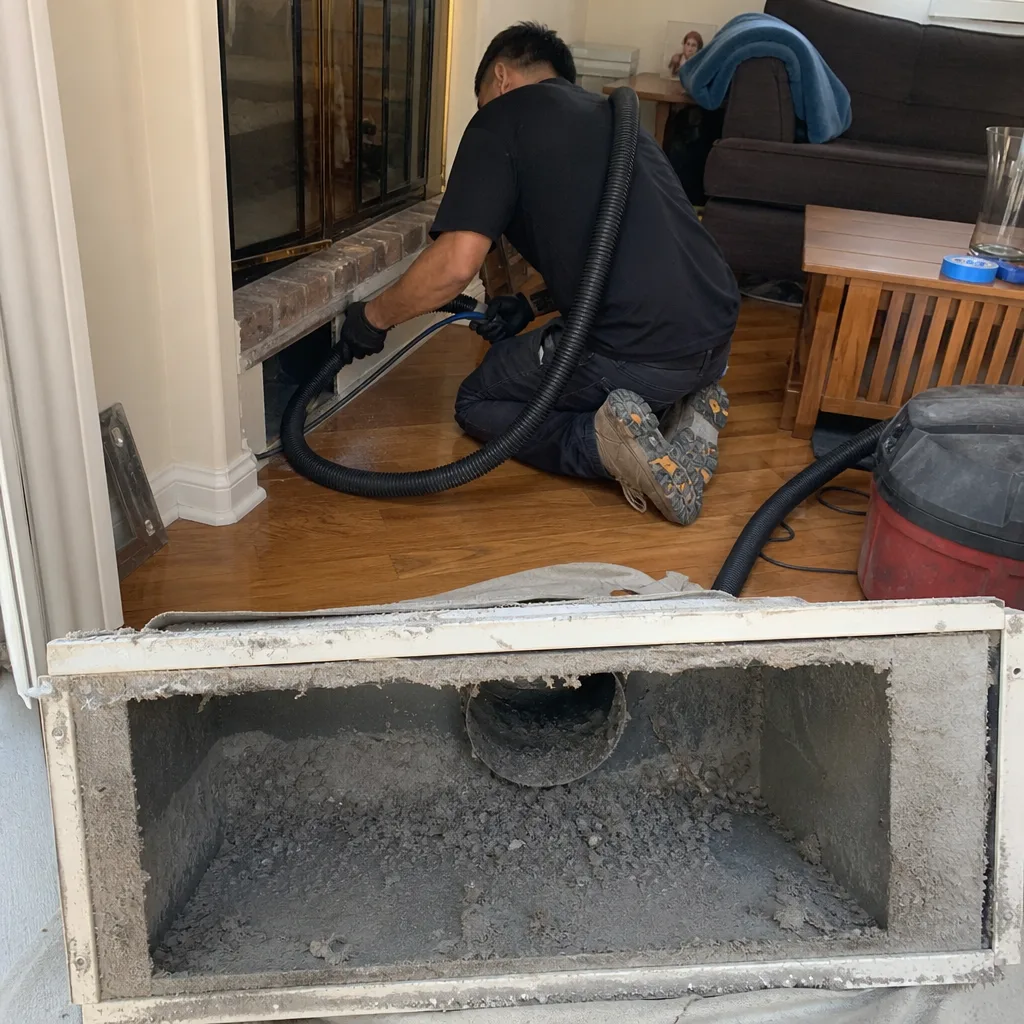 Before
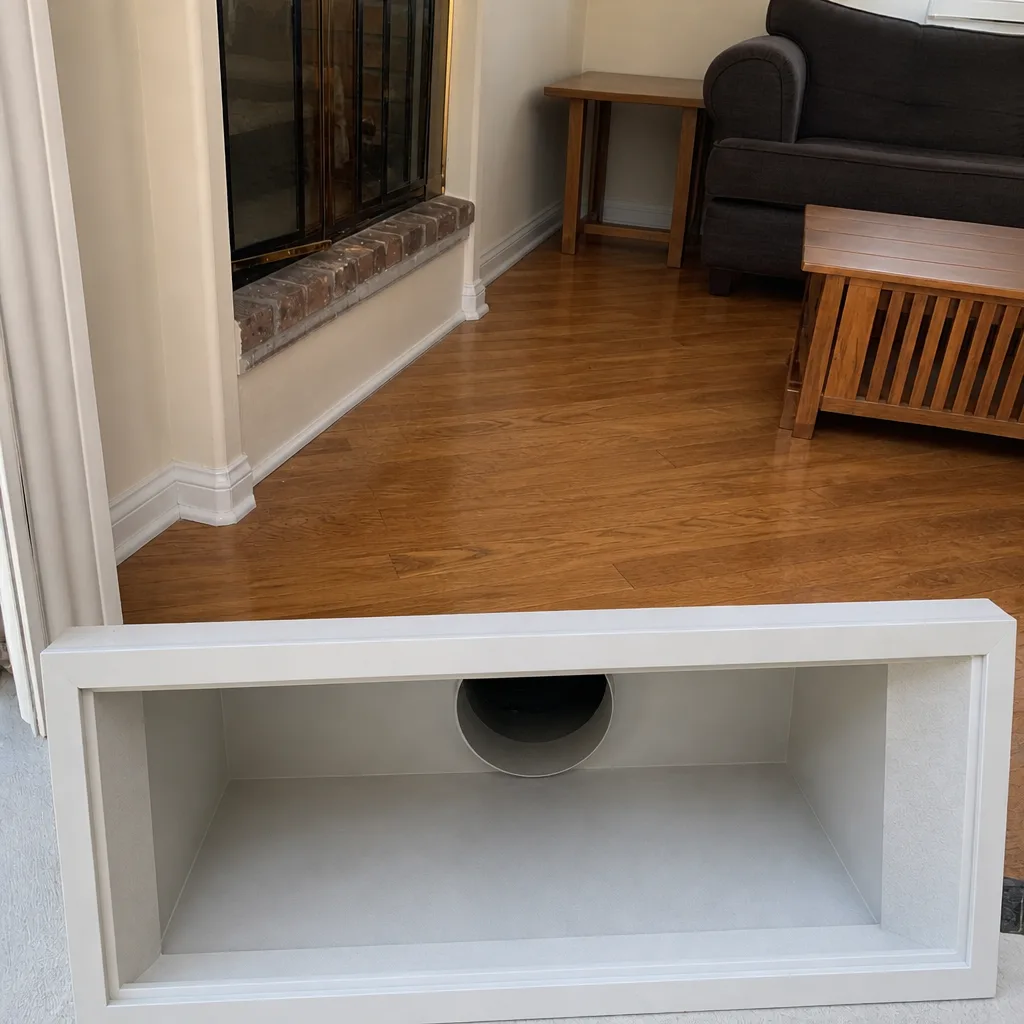 After
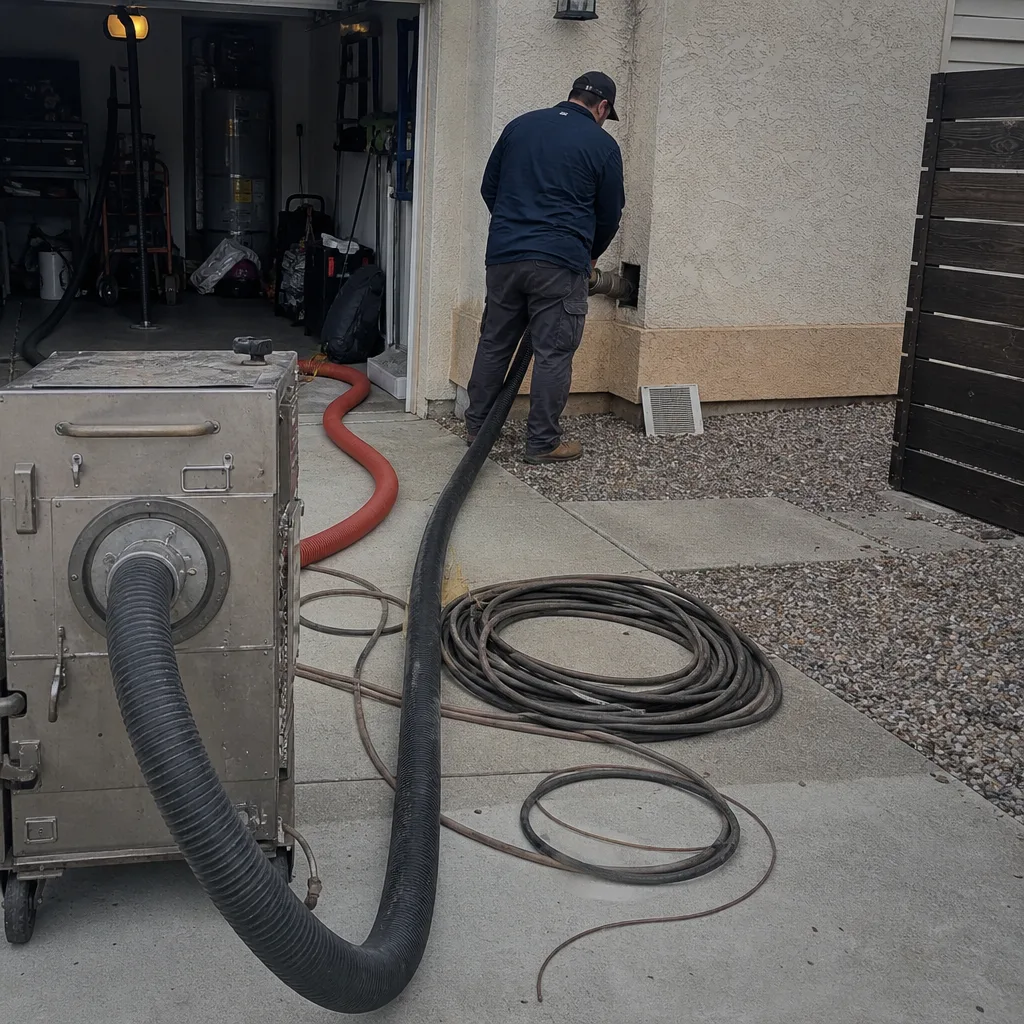 Before
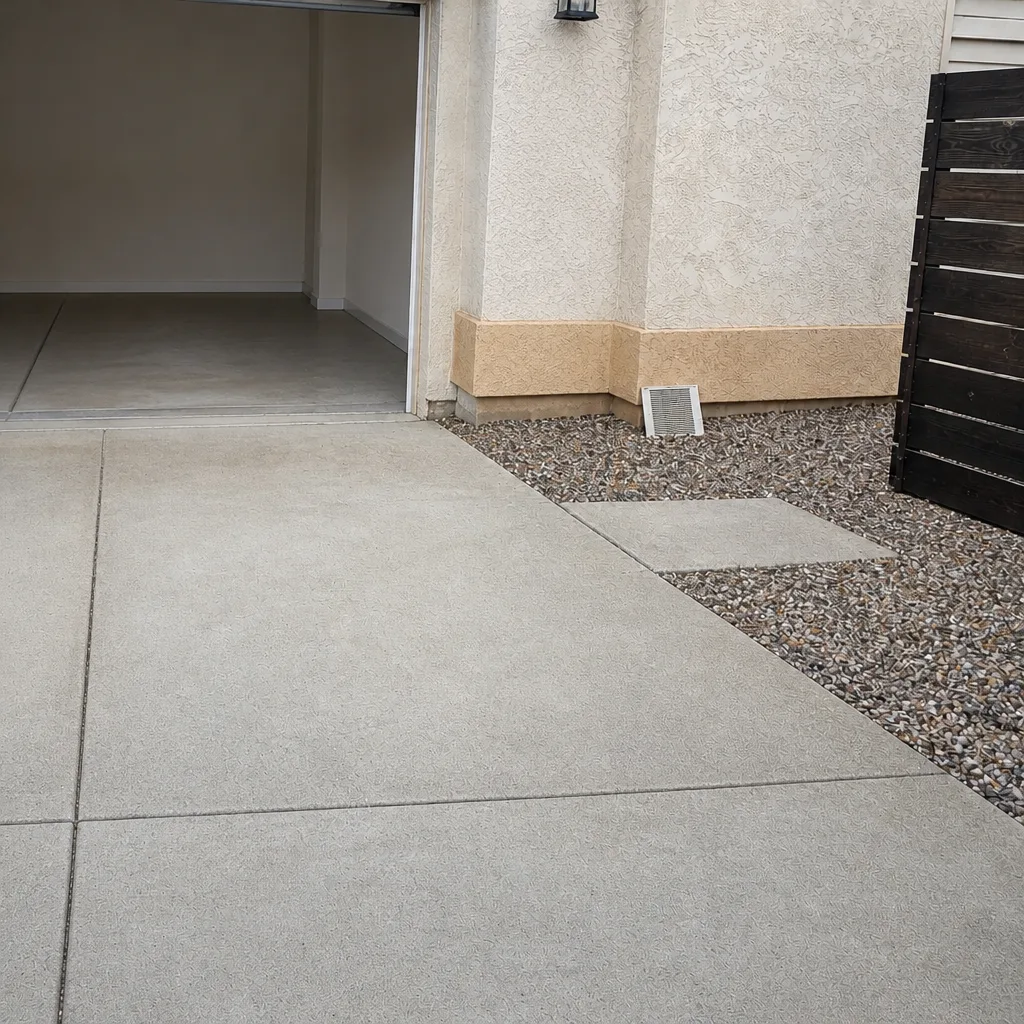 After
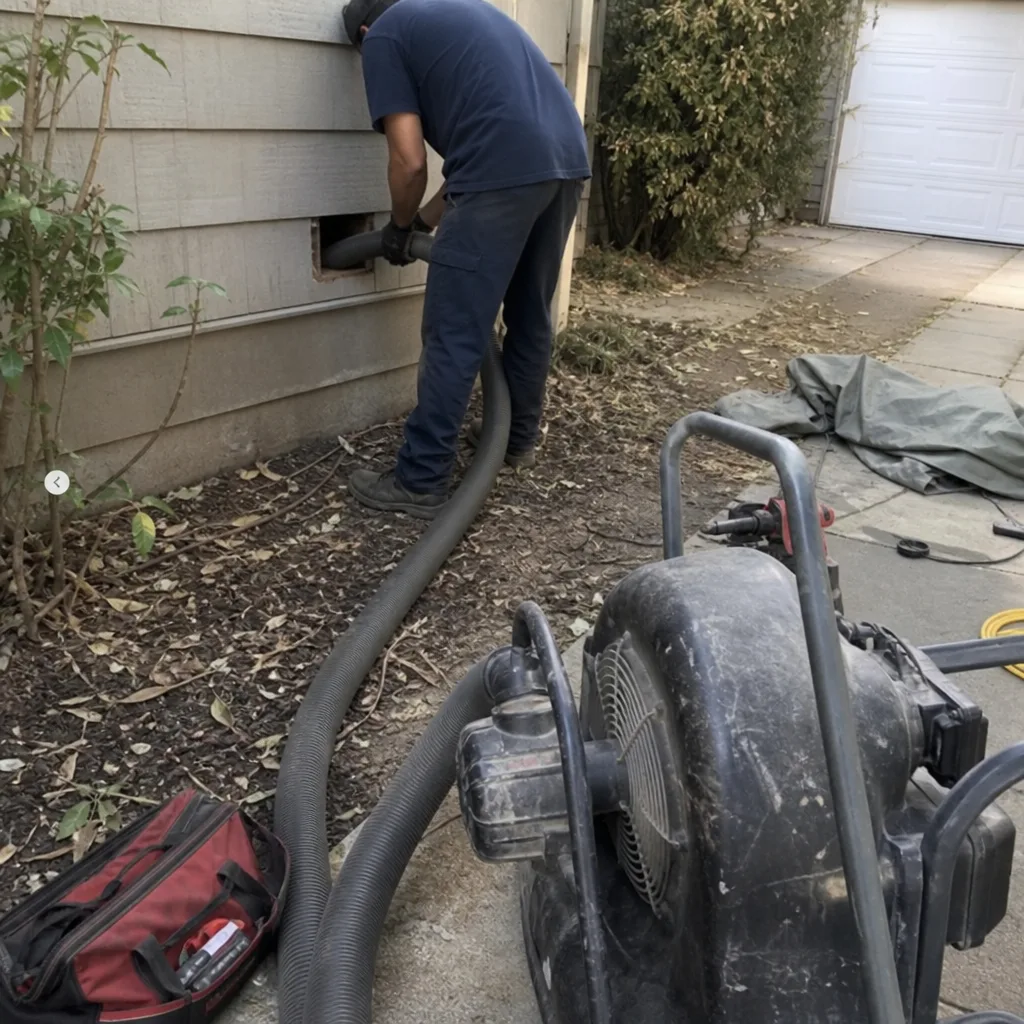 Before
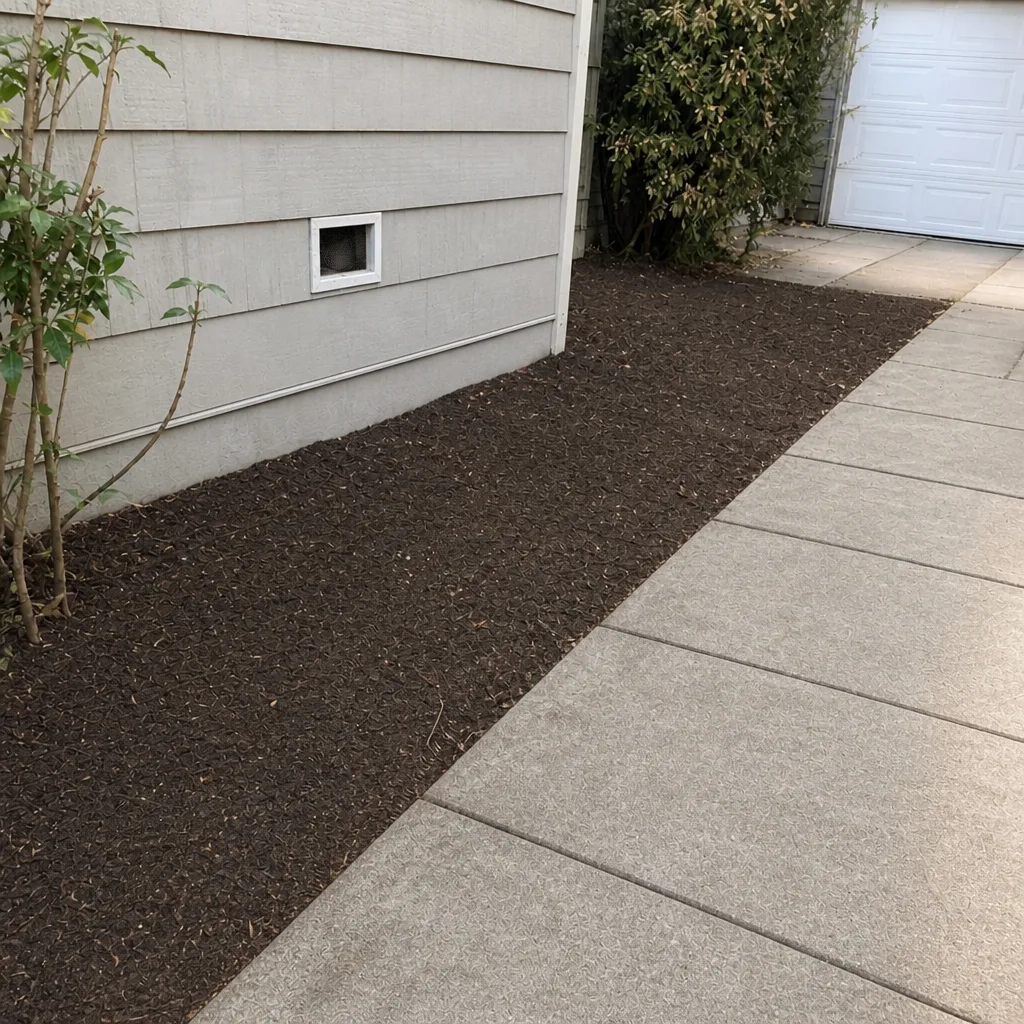 After
When to Call a Professional
Some of this guide is work a homeowner can do: shut off the thermostat, seal a return grille, photograph the nameplate. The inspection, cleaning, repair, and sealing steps are not homeowner work, and here’s when to call us instead of trying to sort it out alone. Call if the system ran at all during a regional smoke event and your supply registers smell smoky or musty. Call if you’ve been through a noticeable earthquake and haven’t inspected the crawlspace or attic for disconnected flex duct. Call if water reached the air handler, the return plenum, or any visible duct during a flood. Call if a renovation loaded the return system with drywall dust. And call if you don’t have a pre-loss documentation baseline and want one built before the next event.
Air Duct Cleaning Washington Square offers free estimates in Washington Square. Our technicians have up to 8 years of experience, we use professional-grade equipment from Rotobrush, Nikro, and Abatement Technologies rather than general-purpose vacuums, and the local professional we connect you with is licensed and insured as their state requires. Call (877) 792-6053. We answer 24/7. Fast dispatch from 7am to 7pm, Sunday through Friday.
Frequently Asked Questions
Yes. Turn the system to OFF, not to fan, before the smoke plume arrives, close the outdoor air intake, and seal the return grilles with plastic sheeting. Running the system in recirculation mode during a smoke event re-distributes contamination through every room and drives smoke particulate deeper into the duct liner. Keep it off until AQI stays below 100 for 24 hours. If you’ve already run the system through a smoke event and smell smoke at the registers, call (877) 792-6053 for a cleaning estimate.
Air duct cleaning in Washington Square is priced per system, not per vent, and the written estimate sets the final price. A whole-system cleaning with agitation, containment, sanitizing, and before-and-after photos is quoted as one flat price agreed before work starts. The reason per-vent pricing is risky is simple: the total is unknown until the technician is on site, and that’s the pattern behind most bait-and-switch complaints in this trade. Ask for a flat per-system price in writing. Call (877) 792-6053 and we’ll give you one – estimates are free.
You can’t know from inside the living space. Disconnected flex duct, dislodged plenums, and cracked duct board are all behind access panels, in the crawlspace, or in the attic. The signs from inside the house are a new musty or earthy smell after the shaking, uneven airflow between rooms, or a return that seems to be pulling air from an unexpected place. The only reliable check is a visual inspection of the duct system with the access panels open. Don’t run the system to “test” it before that inspection happens.
Turn the system off and shut off power to the air handler at the breaker if water reached the cabinet, the return plenum, or any visible duct. Don’t run the system to “dry things out.” Moist air pushed through the duct system deposits inside the liner, and damp duct liner is where mold establishes. Start structural drying with fans and dehumidifiers away from the ductwork, photograph everything before anything is removed, and book a professional inspection before the system is restarted. Call (877) 792-6053 to schedule.
Cheap quotes are usually per-vent prices that don’t cover the whole system, or they skip the containment equipment, the sanitizing step, and the before-and-after documentation that make a cleaning verifiable. A proper scope uses a rotary-brush system to agitate the debris and negative-pressure extraction to contain it – not a shop vacuum at each vent. Ask what equipment the company uses and whether they photograph the interior condition before and after. If they can’t answer both, the price isn’t a comparison. Call (877) 792-6053 for an honest whole-system quote – estimates are free.
Most homes need it after a specific event rather than on a calendar: a regional smoke event, a flood, an earthquake that opened a duct connection, a major renovation, or a move-in to a home with unknown maintenance history. Homes in older Washington Square housing stock with duct board and panned joist returns benefit from a professional inspection more often than newer construction, because those systems are more vulnerable to cracking and gap-opening. A visual inspection is cheap; discovering contamination months later is not. Call (877) 792-6053 for a free estimate.
The Bottom Line
Emergency preparedness for your duct system comes down to five moves: shut the system down before an event, seal the intake, inspect after any shaking or flooding before restarting, document the pre-loss condition while the system is clean, and clean it professionally with proper agitation and containment once the event passes. The dryer vent cleaning service we offer is the same principle applied to a different system – a fire-prevention appointment, not an upsell. Washington Square homes sit in a region where smoke events and seismic shaking are real, and the housing stock makes the duct system a weak point. Do the preparation before you need it, and the recovery is straightforward.
If you’ve been through an event or want a baseline built before the next one, call us. One flat price per system, agreed in writing before work starts, before-and-after photos of your own ducts, and a satisfaction guarantee. Call (877) 792-6053. We answer 24/7. Fast dispatch from 7am to 7pm, Sunday through Friday.
Written by the team at Air Duct Cleaning Washington Square.